


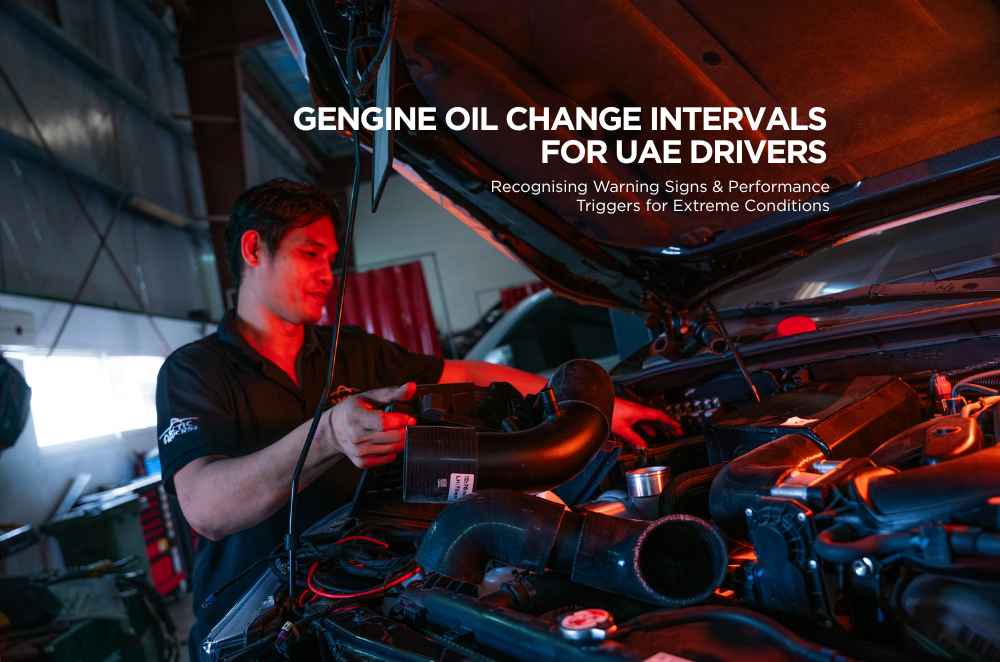
For drivers in the UAE, routine engine oil maintenance is one of the most important aspects of vehicle reliability. Whether you navigate heavy traffic in Dubai or drive long distances between cities such as Abu Dhabi and Al Ain, engine oil condition directly affects performance, efficiency, and long-term engine health.
Many vehicle manuals provide oil change intervals based on moderate climates found in Europe or North America. However, driving conditions in the UAE are significantly harsher. High temperatures, airborne sand, stop-and-go traffic, and frequent short trips place additional stress on engine components.
Because of these factors, drivers often need to service their vehicles more frequently than the standard global recommendation.
Key Takeaways for UAE Drivers
- Extreme desert heat shortens engine oil lifespan
- Many vehicles require oil changes every 5,000 – 8,000 km
- Turbocharged engines usually need shorter intervals
- Full synthetic oil performs better in hot climates
- Regular oil maintenance helps improve fuel efficiency and resale value
These guidelines reflect how local driving environments affect engine performance rather than relying solely on manufacturer estimates.
Why Oil Maintenance Is Critical in the UAE Climate
Engine oil performs several important functions inside your vehicle:
- Lubricates moving components
- Reduces friction between metal parts
- Helps control engine temperature
- Prevents sludge and carbon deposits
However, the UAE’s climate creates additional challenges. During summer, outside temperatures regularly exceed 45°C, which increases engine heat and accelerates oil breakdown.
Other environmental factors also influence oil quality:
- Dust and sand exposure
Fine desert particles can enter the engine through the air intake system, contaminating oil over time. - Urban traffic congestion
Stop-and-go driving increases engine load and raises operating temperatures. - Short daily trips
When engines do not reach full operating temperature, moisture and contaminants can accumulate inside the oil.
For these reasons, many automotive experts categorize UAE driving as “severe operating conditions.” Vehicles driven under severe conditions typically require shorter service intervals.
Recommended Oil Change Intervals for UAE Driving
The ideal oil change schedule depends on several variables including engine design, oil type, and driving patterns.
Below are practical maintenance intervals commonly recommended for UAE conditions.
| Driving Pattern | Suggested Oil Change Interval |
| Mostly highway driving | 8,000 – 10,000 km |
| Daily city traffic | 6,000 – 8,000 km |
| Extreme heat with short trips | 5,000 – 7,000 km |
| Turbocharged engines | 5,000 – 7,000 km |
Drivers who regularly travel through congested areas such as Sheikh Zayed Road or downtown Dubai should typically follow the lower end of the range.
Rather than relying only on the number printed in the owner’s manual, it is best to adjust service intervals based on real driving conditions.
Understanding Engine Oil Grades
Choosing the correct oil grade is just as important as changing it regularly.
Most vehicles operating in the UAE commonly use SAE 5W-30 or SAE 5W-40 synthetic oil.
The numbers describe oil viscosity:
- 5W refers to low-temperature flow performance
- 30 or 40 describes oil thickness at high operating temperatures
In hot environments, 5W-40 oil often provides stronger protection when engines are running under heavy loads.
Drivers should always follow manufacturer recommendations and ensure the oil meets modern standards such as API SP or SN, which protect against wear, deposits, and high-temperature degradation.
Signs That Your Vehicle May Need an Oil Change
Waiting for a warning light is not always the best approach. Drivers should watch for early signs that oil quality has deteriorated.
Common indicators include:
- Dark or thick oil when checking the dipstick
- Unusual engine noise or knocking
- Reduced fuel efficiency
- Burning smell from the engine area
- Oil warning light appearing on the dashboard
If the oil appears gritty or excessively dark, it may already be contaminated and should be replaced as soon as possible.
Ignoring these warning signs can result in accelerated engine wear and expensive repairs.
How Regular Oil Changes Protect Your Engine
Routine oil maintenance contributes to several important benefits.
- Improved engine performance
Clean oil allows moving parts to operate smoothly and efficiently. - Better fuel economy
Reduced friction means the engine uses less fuel to produce the same power. - Lower risk of engine damage
Fresh oil prevents sludge buildup and protects internal components. - Higher resale value
Vehicles with documented service history often attract better resale prices in the UAE used-car market.
Drivers who travel approximately 20,000 km per year typically require two to three oil changes annually depending on driving conditions.
Additional Factors That Affect Oil Lifespan
Beyond temperature, several environmental elements influence oil performance in the UAE.
- Sand contamination
Fine desert particles can enter through the air intake and mix with engine oil over time. - Humidity in coastal areas
Cities such as Dubai and Abu Dhabi experience higher humidity levels, which can contribute to internal corrosion if oil quality deteriorates. - Extended idling
Long periods of idling, common during heavy traffic, increase internal engine temperature and stress.
Because of these factors, many professional workshops recommend periodic oil inspections or laboratory oil analysis for high-mileage vehicles.
Typical Oil Change Costs in Dubai
The cost of an oil change depends on several factors:
- Oil brand and viscosity grade
- Vehicle engine size
- Type of oil filter used
- Workshop service standards
For most passenger vehicles in Dubai, oil change services generally range between AED 250 and AED 900 depending on oil type and vehicle specifications.
Larger SUVs and performance vehicles may require additional oil capacity, which can increase service costs.
Practical Oil Maintenance Tips
To keep your vehicle running smoothly in the UAE climate, consider the following maintenance habits:
- Check engine oil levels at least once a month
- Replace the oil filter during every oil service
- Avoid mixing different oil brands without confirming compatibility
- Follow the manufacturer’s recommended oil grade
- Schedule maintenance before peak summer temperatures
Keeping digital or written service records can also help maintain your vehicle’s value over time.
Frequently Asked Questions
Can oil change intervals exceed 10,000 km?
Some manufacturers allow extended intervals when premium synthetic oil is used. However, extreme heat and traffic conditions in the UAE often justify shorter service cycles.
Is synthetic oil necessary?
While not mandatory for every vehicle, synthetic oil generally offers better protection against high temperatures and engine wear.
Does engine oil affect vehicle inspection?
Indirectly, yes. Oil leaks, engine smoke, or dashboard warning lights can affect inspection results during vehicle registration tests.
How do I know which oil is correct for my car?
Always consult the owner’s manual and ensure the oil meets the correct SAE viscosity rating and API certification recommended by the manufacturer.
Final Thoughts
For most drivers in the UAE, the practical oil change interval falls between 5,000 and 8,000 kilometers, especially when vehicles are used in heavy traffic or extreme heat.
Highway driving with premium synthetic oil may allow intervals closer to 10,000 km, but this should only be done when supported by manufacturer guidance and driving conditions.
Regular oil maintenance protects engine components, improves efficiency, and helps prevent costly mechanical problems.
At Arctic Trucks Middle East, proper vehicle maintenance and engineering expertise are essential for ensuring reliability in demanding environments. Whether driving through city streets or exploring remote desert terrain, maintaining your engine oil is one of the simplest and most effective ways to protect your vehicle.